Unprofessional Relationships
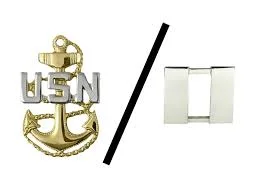
“Unprofessional relationships” is a term used to describe personal interaction that results in or reasonably creates the appearance of favoritism, misuse of position or authority, or the abandonment of organizational goals for personal interests.
Depending on the frequency of the activity or the absence of official purpose, the following may be perceived as unprofessional:
Shared living accommodations
Vacations
Transportation
Off-duty interests
"Fraternization” is an unprofessional relationship between an officer and an enlisted member that violates the customary bounds of acceptable behavior in the military service.
Officers will not do the following with enlisted members:
Gamble
Lend money to, borrow money from, or become indebted
Engage in sexual relations or date
Share living accommodations (except when military operations require)
Engage on a personal basis in business enterprises with, or solicit or make solicited sales
Special considerations arise for traditional National Guard members. When members are not on active duty, full-time Guard duty, or inactive duty training, commanders and supervisors should tailor application and enforcement of the regulation to the unique situations that arise from part-time service.
When an unprofessional relationship is discovered, commanders should take the least severe action necessary to terminate the unprofessional aspect of the relationship, including:
Counseling
Reprimand
Removal from position
Reassignment
Demotion
Delay of promotion
Adverse comments in performance reports
Separation
More serious cases may warrant nonjudicial punishment and even trial by court-martial.
When appropriate, an order to cease the relationship should be given.
Instances of actual favoritism, partiality, or misuse of position may constitute independent violations of the Uniform Code of Military Justice, state military justice codes, or the Joint Ethics Regulation.
learn more about military standards
Participation in extremist organizations and activities by DoD personnel is inconsistent with the responsibilities of military service and policy.
Military personnel must not actively advocate supremacist, extremist or criminal gang doctrine, ideology or causes, including those that advance, encourage or advocate illegal discrimination based on race, creed, color, sex, religion, ethnicity or national origin; or those that advance, advocate or encourage the use of force, violence or criminal activity; or otherwise deprive individuals of their civil rights.
The Department of Defense requires certain military members and civilian employees to file annual financial disclosure forms to insure employees do not engage in official financial transactions or decision-making that, due to their private interests, present a conflict of interest.
In the United States, the constitutional tradition of a politically neutral military establishment under civilian control includes nonpartisanship by the military and the elimination of undue military influence on the political process.
Private organizations (POs) are self-sustaining special interest groups that operate on military installations with the written consent of the commander.
A Family Readiness Group (FRG) is an organization created to foster a climate of mutual support within the unit. FRG goals include supporting the military mission through support, outreach and information to family members.
FRG mission-essential activities are supported using a unit's appropriated funds.
Under federal law, the Joint Ethics Regulation and service regulations, members of the Department of Defense (DoD) shall not engage in any personal business or professional activity that presents a conflict between their private interests and the DoD public interest.


As a general rule, spouses and other family members of an authorized traveler may not accompany the military member or civilian employee on official business at government expense.
Spouses may travel at government expense in limited situations

Fundraising is the solicitation of funds from or sale of items to military and civilian personnel.
Before any group (to include squadron booster clubs, private organizations, unit advisory councils, etc.) engages in a fundraising activity, either on or off base, prior approval must be obtained from the installation commander or his designee.

DoD employees may not accept or solicit gifts from a prohibited source or given because of their official positions. A gift includes any item having a monetary value.
Government resources and property may only be used for authorized purposes.
With few exceptions, supporting non-federal entities (NFEs) -- even if the government is compensated or reimbursed -- is an improper use of funds and resources.

Although military members have the right, within established limits, to express their individuality through their appearance, the military services have defined what is and what is not acceptable.

Absent an adverse impact on military readiness, unit cohesion, or good order and discipline, commanders will accommodate individual expressions of sincerely held beliefs of military members.

“Unprofessional relationships” is a term used to describe personal interaction that results in or reasonably creates the appearance of favoritism, misuse of position or authority, or the abandonment of organizational goals for personal interests.